The Art of Banking
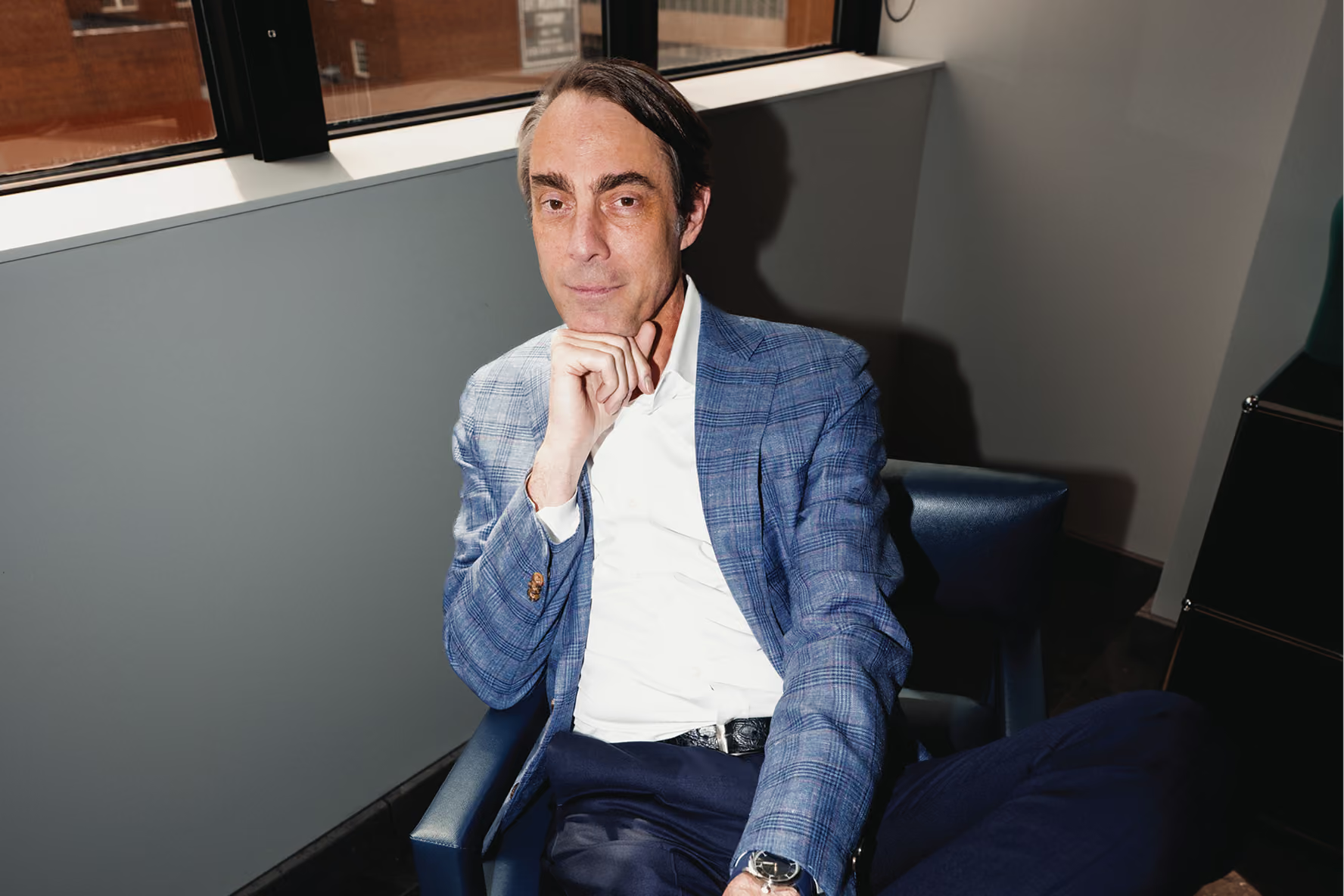
Matt Michaelis's father can recite the provenance of all 943 pieces of art displayed at Emprise Bank's HQ. Matt Michaelis wants everyone at his bank to be able to recite loan decisions in the same way, and he is building a "company brain" to help them do it.
The curator's son
For a while, employees thought the most expensive object inside the headquarters of Emprise Bank was a banana.
It materialized on the wall one day, held aloft with a strip of silver duct tape. Rumor had it that Mike Michaelis, the father of current CEO Matt, had bought Maurizio Cattelan's infamous artwork from Art Basel. As it turned out, Mike had bought the banana at a grocery store that morning.
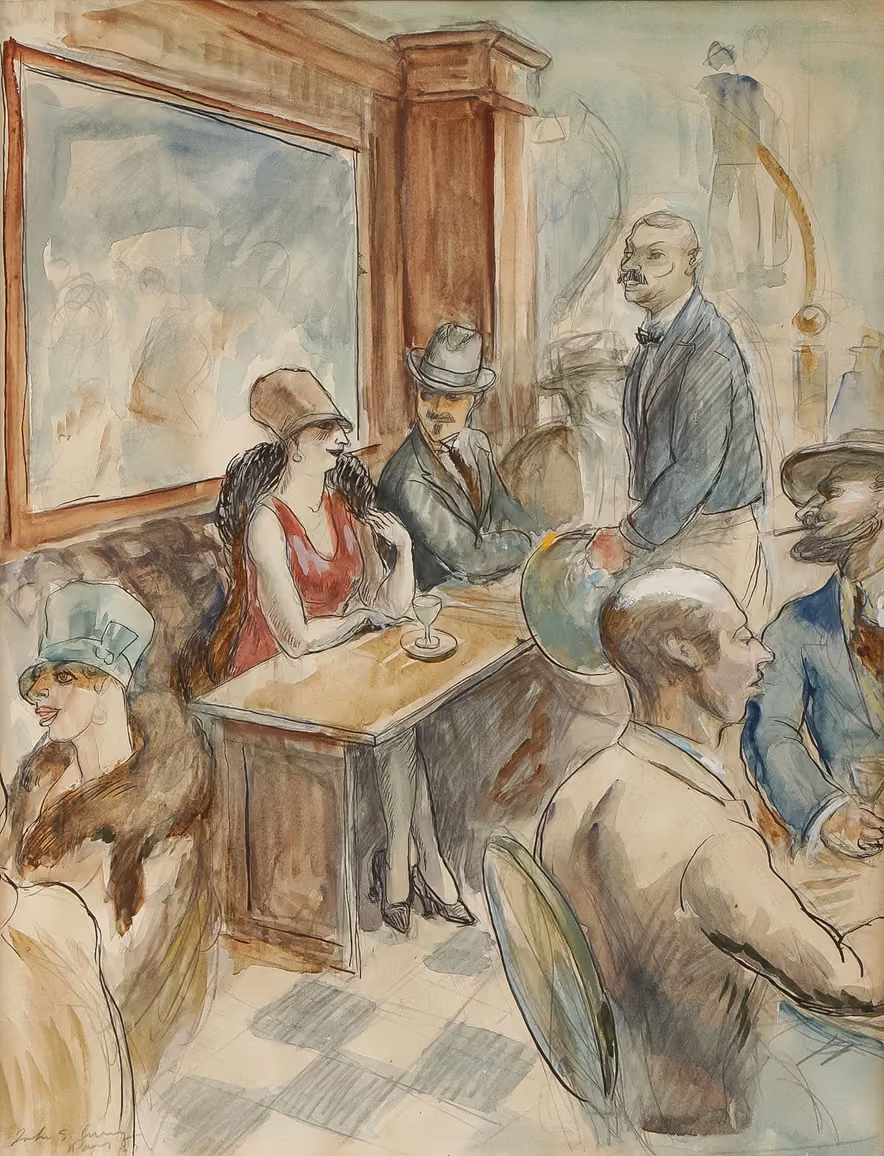
The prank succeeded because Mike has assembled an art collection of more than 3,000 pieces, covering every square inch of Emprise Bank's walls, and the walls of its 32 branches.
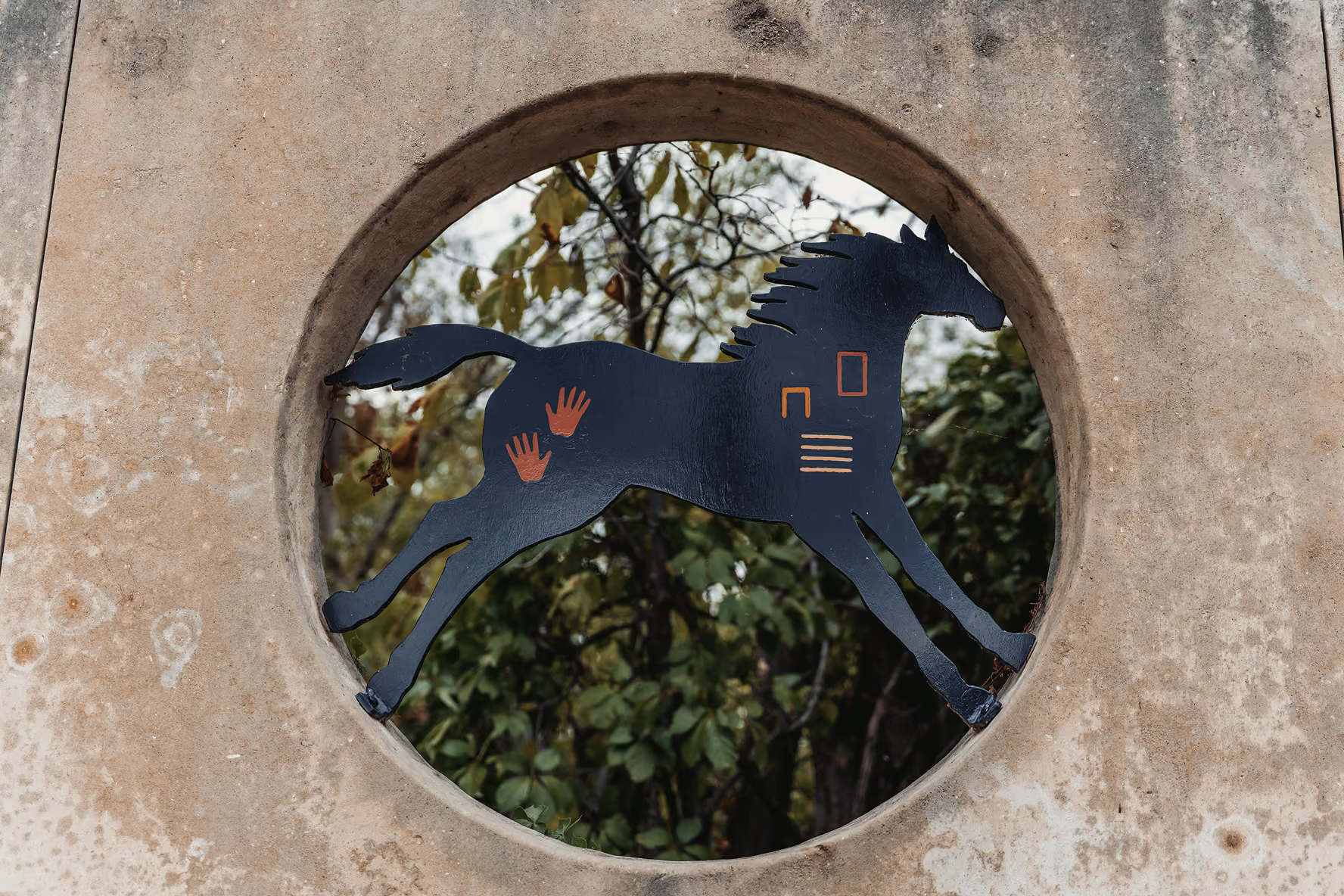
The collection, curated over a 40-year period, is by artists with a connection to the areas it serves: largely the state of Kansas but has more recently included artists from Kansas City, Omaha, Sioux Falls. The corridors at the bank's HQ hold gilded miniatures of old bank facades, painted folk-art houses, a wire cube on a plinth, and a row of small metal figures marching across a credenza. In one office a Godzilla stands guard on a shelf.
Every new hire gets to choose a piece of art to hang behind their desk. For years this meant flipping through a three-ring binder "about this thick," Matt Michaelis says, holding his hands a few inches apart. Now there is an app. What has not changed is that with the art comes a visit from Mike, regaling the employee with the history of the piece. Asked what he does at the bank now that his son runs it, Mike answers, "I'm the art curator."
From pumpjacks to banking
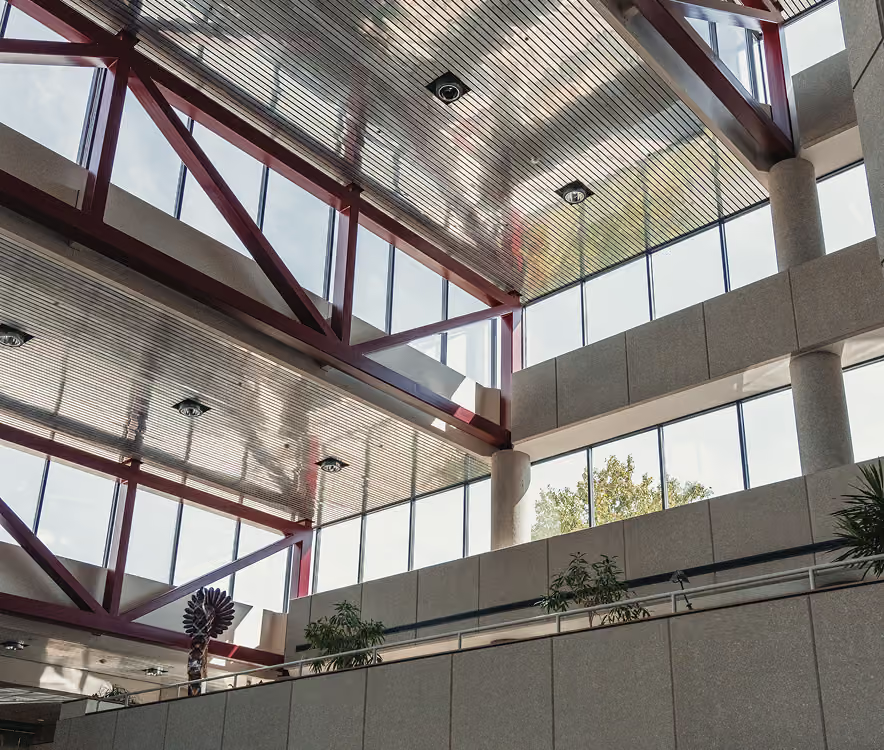
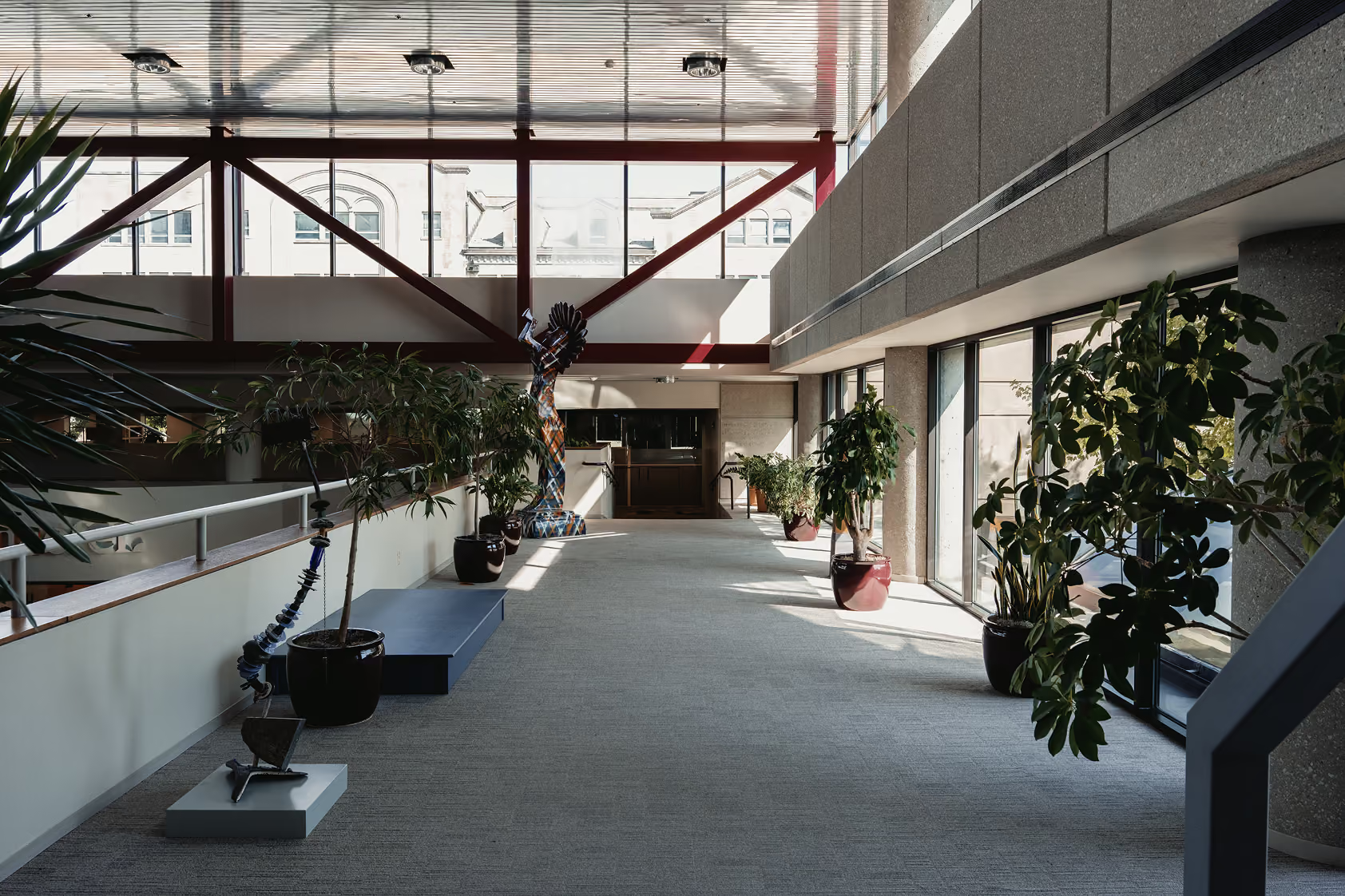
The Emprise Bank building sits in downtown Wichita, and it is not what most people would imagine for a Kansas community bank. You enter beneath exposed steel trusses into an atrium five stories tall, balconies stacked behind white pipe railings, ficus trees in black planters on a floor of polished gray stone. Schaefer, the architecture firm that designed the building, is now a tenant in it, which is a useful form of long-term quality control.
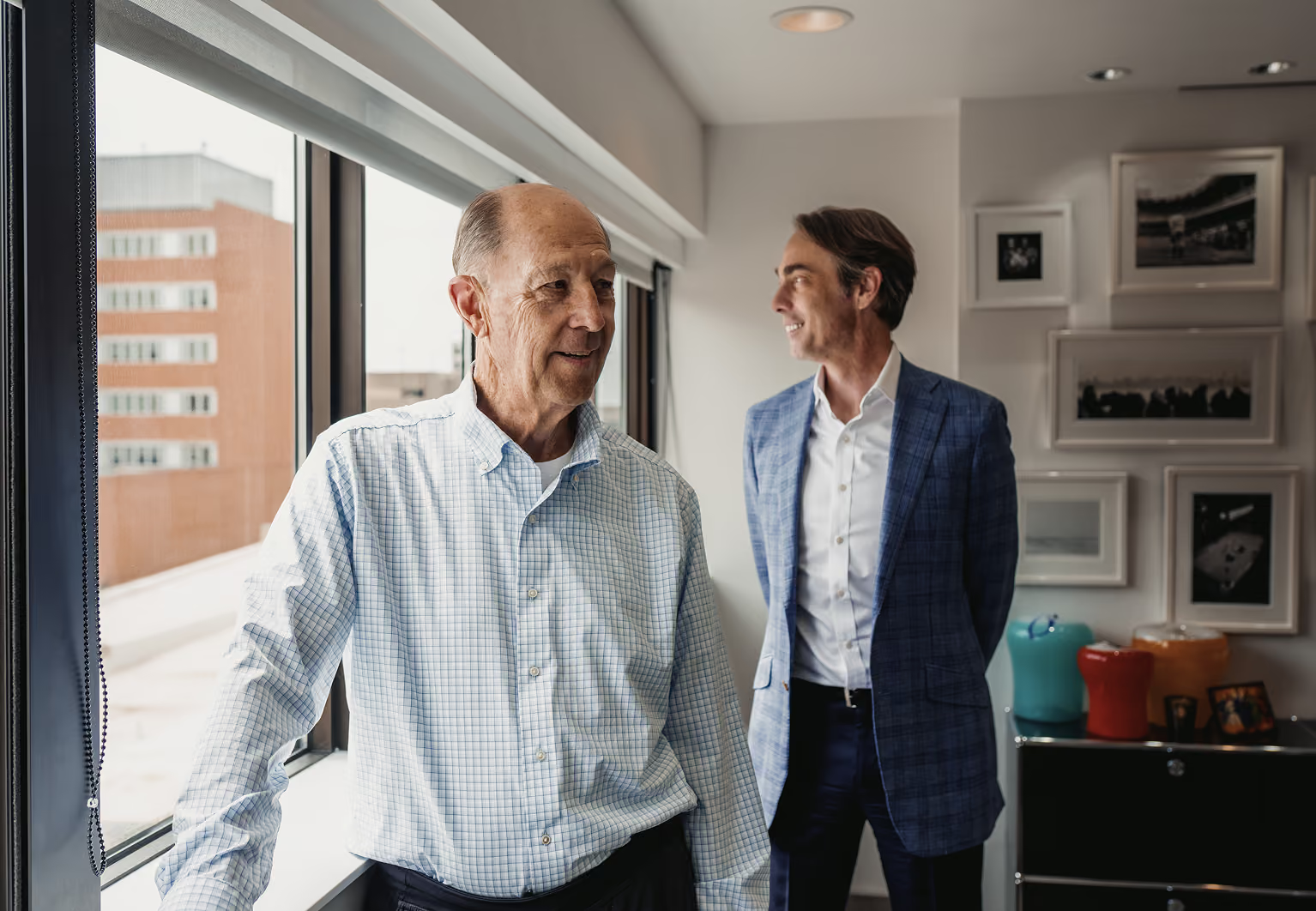
"He likes the art," Michaelis says,
"[but] his real passion is the artists."
On the day of our visit, it was 95 degrees, and by mid-afternoon a storm was building in the south, visible from the windows of Michaelis's corner office. Coming straight out of a board meeting, Michaelis appeared poised, tall, and narrow, dressed in a blue windowpane blazer over an open white shirt. Behind his desk hangs a wall of black-and-white photographs of New York and Kansas, which represent the two halves of his career. On the desk sits a small black model of an oil pumpjack, the kind that still nods in the fields outside town. It is a relic of the family's first business.
"The market is fundamentally changing. And I need to go [and] build what I called a mini bank."

In 1965 W.A. Michaelis Jr. bought Sierra Petroleum, an oil company that happened to own Stockyards National Bank. It turned out that the bank was the better business, and through the 1970s and 80s Michaelis's grandfather and father started buying charters. "In Kansas, back when my dad and my grandfather were acquiring banks, you couldn't even branch," Michaelis says, explaining how they had to buy banks rather than open branches in order to expand.
In 1989 when Kansas law finally loosened, Mike merged the family's Wichita banks under a single new name, Emprise. The 1990s and 2000s were a long exercise in folding separate charters into one: a savings and loan in the mid-1990s that roughly doubled the bank's size, the remaining community charters between 2002 and 2005, and in November 2006 Prairie State Bank, which brought with it 11 branches and pushed Emprise past a billion dollars in assets. The art collection was a byproduct. Mike bought four branches, noticed there was nothing on their walls, and went looking for something to hang. "At least the lore is that. He went to find some art for those branches and that just started a hell of a mess," Michaelis says with a chuckle.
Reflecting on the bank's period of acquisition before he took the helm, Michaelis does believe that consolidation makes sense in the industry. "Banking is a scale business," he says, reciting the arithmetic of the industry like it's second nature: 2 to 3 percent of American banks acquired every year, decade after decade; the cost of delivering the service, and the regulation behind it, rising every year; a long tail of small charters, perhaps 143 of them in Kansas alone. "I would love to go [and] do M&A in the bank space. I love deals, I love acquisitions, I did it for 20 years from an advisory perspective. I laugh at myself because I have no interest in doing it here." An acquisition, by his estimate, would tie up the bank's leadership for 18 months. "We'd much rather spend that time building on the inside."


So despite his grandfather and father successfully growing the family business through acquisition, Michaelis proposes to reach scale through a different means. His goal is to build a second bank inside the first, serving embedded finance programs in addition to Wichita households, using what he calls a "company brain" to store and surface knowledge, wired into the middle of the institution.
With love, from New York
Michaelis began his career at Salomon Brothers in 1995, and spent two years in the financial institutions group, raising capital and advising on mergers for banks and insurers. He left with his boss to join Greenhill & Co, which was a new type of investment bank founded by Robert Greenhill, who ushered in a different model of M&A. At Greenhill, Michaelis spent a lot of time working in the telecom industry: towers, roaming networks, the service companies that climb the towers, and in the late 2000s he founded Perla Capital Partners to invest in that infrastructure himself.
When he moved back to Wichita in 2013, Perla came with him. While running his wireless-infrastructure fund, he also sat on the Emprise Bank board, and the bank was, in his words, "a good performer, but stagnant." Michaelis saw ten years of not much growth and a pretty traditional mindset. "I took it upon myself to write a memo around the opportunities that I saw for the bank," he says. As the bank president neared the end of a 20-year run and was ready to retire, Michaelis's memo won him the top job. At the start of 2018 he became CEO of Emprise Bank.
When the market talks, Michaelis listens
"I didn't have a master plan," he says. Instead, he had a set of reflexes and intuitions that enabled him to deploy capital quickly while the slower, longer-term bets matured. First, the consumer digital channels came off the core and onto a modern platform. Soon after, he opened commercial offices in Kansas City and Omaha, describing it as "an accelerated growth opportunity." Next, the loan origination system was replaced, quickly followed by the wealth platform.
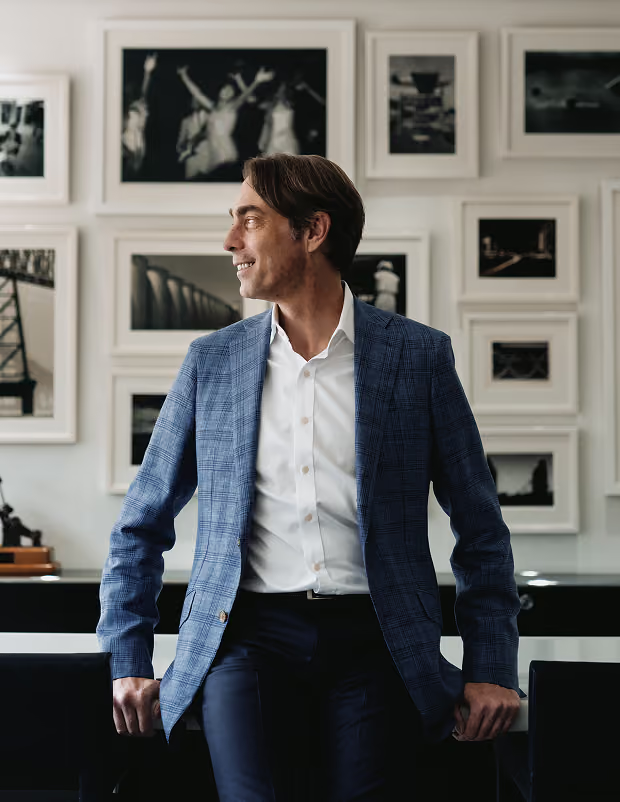
"I would love to go [and] do M&A in the bank space. I love deals, I love acquisitions, I did it for 20 years from an advisory perspective. I laugh at myself because I have no interest in doing it here."
In the midst of that, the neobanks arrived. First the generalists and then the vertical brands. Emprise tried to compete, running a digital pilot in a nearby Kansas town where it had no branch. It spent months designing a vertically focused flanker brand and doing the consumer research, but ultimately concluded that Emprise is, "a brand name that is pretty narrowly focused," and really had no plausible way to compete broadly with Chime or other fintechs as the bank for the next generation. Then, at the end of 2019, Google announced a checking account inside Google Pay, to be held at a handful of partner banks. "I can't compete with Google," Michaelis recalls thinking, "but [we] can be one of those banks that supports Google Plex." Although Plex died before launch, the idea did not.
His theory of banking-as-a-service differed from the one circulating at the time, which held that fintech programs were a source of cheap deposits to fund a community bank's loans. "I don't think that was ever the case," he says. He remembers thinking, "the market is fundamentally changing. And I need to go [and] build what I called a mini bank." The idea was to build a replica of Emprise, with deposits and loans and fee income of its own, serving programs instead of people, with each program assigned a relationship manager the way a commercial borrower would be.
The bank signed with Treasury Prime in 2021, a partner Michaelis still praises for its technology and for a shared view that processor, program, and bank must all be in the room. But Treasury Prime pulled back from selling on its banks' behalf, and Emprise, which had no sales force for this business, stalled. "Two steps forward, one step back." In October 2022, in a board meeting, a director he describes as the one who "asks the best questions" told him that if he wanted the business to grow he had to hire people who had already grown one. In March 2023 he hired Whitney Woyke, who had run banking-as-a-service at Pathward, one of the industry's originals, and soon after her Sonya Theisen, also from Pathward. Asked what he would advise another CEO trying to get into the space, he admits "I would have probably ensured we had experts from the very beginning."
He calls the intervening years "a period of investment." The bank built compliance and operating capabilities before it onboarded programs, which he regards as the right sequence and also the reason it took so long. Now in the scaling phase, the chosen embedded finance programs will be fully ramping by the first half of 2027.
Building the company brain
Michaelis began building an artificial-intelligence capability before he could have explained what that meant. In 2018 he hired a data scientist just out of school whose family he had known for years. "I'm like, I need you to come work for me and teach me what I don't know. I know this is important, but I don't know anything about it."
In the intervening years, Emprise has built a set of machine-learning models embedded in ordinary work, most of them in an advisory capacity rather than decision makers. The first was a next-best-product engine: when a customer turns up at a teller window, a call center, or in the app, the model has already sifted their transactions and holdings and tells the banker what to offer next. The second was a small-business underwriting model that frames the deal and points the underwriter at the questions that matter most for that particular borrower. Every model goes through the bank's model-risk-management process and is documented for examiners. Michaelis says they have responded well so far, in part because a human still makes the call. "Most of them today are not solely relied on for decision-making. I think over time that will change."
In development now is something a little bigger, and Michaelis lights up describing it. During a conversation with a friend and fellow banker, the friend mentioned that he had typed his online banking credentials into Claude, Anthropic's chat assistant, so it could see his accounts. "I'm like, wait, you're a banker... And you put your sign-in credentials into Claude? It is happening. And so we need to be there for it." He calls the product the "agent delivery channel", and the goal is to allow an agent, sent by a customer, to perform tasks on the customer's behalf. The trick, of course, will be enabling it to do something useful for the customer without handing it the keys to the kingdom.
Over the years not every experiment has worked. A churn-prevention model was built and stopped. Michaelis cannot recall the ratio of experiments that make it to production. "I think it's higher than 1 out of 10, but I know it's not 9 out of 10 for sure."
Through these years of development, two useful practices have emerged. The first is a roadshow, where a couple of employees who understand both the models and the business spend time with each department, showing them what the tools can do, and asking where they could help.

The point is as much permission as discovery. "You could have the best AI team build the best models, and if your business doesn't want to ingest and use it, it'll just sit there." The second is a 90-day sprint, a practice common in technology companies, but quite novel in banking. The idea is that one person from the business side and one person from the data team take a single use case and sit in a room working on a product until completion. As Michaelis puts it, the instructions are, "you're not getting out until it's done."
All of this development and experimentation has culminated in a project that Michaelis calls the "company brain". Reflecting on his father's near-photographic memory about the provenance and details of over 3,000 works of art, Michaelis wondered, what if everyone in the company can recall the provenance and details of every loan application decision? The file on a commercial loan, he pointed out, holds the decision and nothing of the reasoning. "It doesn't say, here's the initial request, here are the conversations, here's why we liked it, here's why we didn't, here's how we mitigated that risk, here's how we changed terms, here's how the committee talked." So the bank has started transcribing committee meetings and the early "prescreen" conversations where a lender first floats a deal, and attaching them to the loan file. The goal is to create a body of judgment that a model can learn from, so that a lender across the table from a client can get an answer on the spot with "the full breadth of the bank" in a sidecar. Commercial lending is the first use, but there are many more, including compliance for the embedded banking business.
With so much in development, and more ideas brewing, the bank is hiring software developers and a Head of what it calls its "intelligent enterprise", to build more agents for both customers and employees. Michaelis is clear about what the bank will and will not do, however: they do not intend to train their own proprietary LLM, but importantly, the bank will own the data layer.
The importance of the family business
At lunch on the day we visited, Michaelis and his father talked about art and banking. Mike was bidding on an inexpensive piece by an Omaha artist he had eaten dinner with a year before. "He likes the art," Michaelis says, "[but] his real passion is the artists." The importance of investing in their community is apparent when you leave the Emprise Bank HQ. Right across the road is a dog park. The lot used to hold the building where W.A. Michaelis Jr. did most of his work, but after many years of supporting him and his staff, it suffered from an electrical fire and was torn down. Matt Michaelis knows that not everything about the future is agents and debits and credits. There are also the people and the community, and the family intends to serve both, in whatever form that takes, for a long time yet.
 Back to top ↑